Search results for null
Books
The Mysterious Affair at Styles
Agatha Christie
From Wikipedia:
The Mysterious Affair at Styles is the first detective novel by British writer Agatha Christie, introducing her fictional detective Hercule Poirot. It was written in the middle of the First World War, in 1916, and first published by John Lane in the United States in October 1920 and in the United Kingdom by The Bodley Head (John Lane's UK company) on 21 January 1921.
Styles introduced Poirot, Inspector (later, Chief Inspector) Japp, and Arthur Hastings. Poirot, a Belgian refugee of the Great War, is settling in England near the home of Emily Inglethorp, who helped him to his new life. His friend Hastings arrives as a guest at her home. When Mrs Inglethorp is murdered, Poirot uses his detective skills to solve the mystery.
The book includes maps of the house, the murder scene, and a drawing of a fragment of a will. The true first publication of the novel was as a weekly serial in The Times, including the maps of the house and other illustrations included in the book. This novel was one of the first ten books published by Penguin Books when it began in 1935.
Styles was well received by reviewers in the UK and the US at initial publication. An analysis in 1990 was positive about the plot, considered the novel one of the few by Christie that is well-anchored in time and place, a story that knows it describes the end of an era, and mentions that the plot is clever. Christie had not mastered cleverness throughout her first novel, as "too many clues tend to cancel each other out"; this was judged a difficulty "which Conan Doyle never satisfactorily overcame, but which Christie would."
The story features many of the elements that have become icons of the Golden Age of Detective Fiction, largely due to Christie's influence. It is set in a large, isolated country manor. There are a half-dozen suspects, most of whom are hiding facts about themselves. The plot includes a number of red herrings and surprise twists.
The Mysterious Affair at Styles launched Christie's writing career. Christie and her husband subsequently named their house "Styles". Hercule Poirot would go on to become one of the most famous characters in fiction. Decades later, when Christie told the story of Poirot's final case in Curtain, she set that novel at Styles.
Journey to the Center of the Earth
Jules Verne
From Wikipedia:
Journey to the Center of the Earth (French: Voyage au centre de la Terre), also translated with the variant titles A Journey to the Centre of the Earth and A Journey into the Interior of the Earth, is a classic science fiction novel by Jules Verne. It was first published in French in 1864, then reissued in 1867 in a revised and expanded edition. Professor Otto Lidenbrock is the tale's central figure, an eccentric German scientist who believes there are volcanic tubes that reach to the very center of the earth. He, his nephew Axel, and their Icelandic guide Hans rappel into Iceland's celebrated inactive volcano Snæfellsjökull, then contend with many dangers, including cave-ins, subpolar tornadoes, an underground ocean, and living prehistoric creatures from the Mesozoic and Cenozoic eras (the 1867 revised edition inserted additional prehistoric material in Chaps. 37–39). Eventually the three explorers are spewed back to the surface by an active volcano, Stromboli, located in southern Italy.
The category of subterranean fiction existed well before Verne. However his novel's distinction lay in its well-researched Victorian science and its inventive contribution to the science-fiction subgenre of time travel—Verne's innovation was the concept of a prehistoric realm still existing in the present-day world. Journey inspired many later authors, including Sir Arthur Conan Doyle in his novel The Lost World, Edgar Rice Burroughs in his Pellucidar series, and J. R. R. Tolkien in The Hobbit.
The Invisible Man
H. G. Wells
From Wikipedia:
The Invisible Man is a science fiction novel by H. G. Wells. Originally serialised in Pearson's Weekly in 1897, it was published as a novel the same year. The Invisible Man to whom the title refers is Griffin, a scientist who has devoted himself to research into optics and who invents a way to change a body's refractive index to that of air so that it neither absorbs nor reflects light. He carries out this procedure on himself and renders himself invisible, but fails in his attempt to reverse it. A practitioner of random and irresponsible violence, Griffin has become an iconic character in horror fiction.
While its predecessors, The Time Machine and The Island of Doctor Moreau, were written using first-person narrators, Wells adopts a third-person objective point of view in The Invisible Man. The novel is considered influential, and helped establish Wells as the "father of science fiction"
The Tenant of Wildfell Hall
Anne Brontë
From Wikipedia:
The Tenant of Wildfell Hall is the second and final novel written by English author Anne Brontë. It was first published in 1848 under the pseudonym Acton Bell. Probably the most shocking of the Brontës' novels, it had an instant and phenomenal success, but after Anne's death her sister Charlotte prevented its re-publication in England until 1854.
The novel is framed as a series of letters from Gilbert Markham to his friend about the events connected with his meeting a mysterious young widow, calling herself Helen Graham, who arrives at Wildfell Hall, an Elizabethan mansion which has been empty for many years, with her young son and a servant. Contrary to the early 19th-century norms, she pursues an artist's career and makes an income by selling her pictures. Her strict seclusion soon gives rise to gossip in the neighbouring village and she becomes a social outcast. Refusing to believe anything scandalous about her, Gilbert befriends her and discovers her past. In the diary she gives Gilbert, she chronicles her husband's physical and moral decline through alcohol and debauchery in his dissipated aristocratic milieu. Ultimately she flees with her son, whom she desperately wishes to save from his father's influence. The depiction of marital strife and women's professional work is mitigated by the strong moral message of Anne Brontë's belief in universal salvation.
Most critics now consider The Tenant of Wildfell Hall to be one of the first feminist novels. May Sinclair, in 1913, said that "the slamming of [Helen's] bedroom door against her husband reverberated throughout Victorian England". In leaving her husband and taking away their child, Helen violates not only social conventions but also early 19th-century English law.
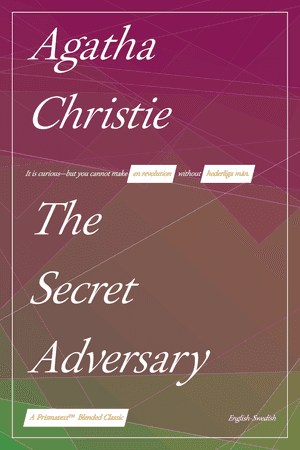
The Secret Adversary
Agatha Christie
From Wikipedia:
The Secret Adversary is the second published detective fiction novel by British writer Agatha Christie, first published in January 1922 in the United Kingdom by The Bodley Head and in the United States by Dodd, Mead and Company later in that same year. The UK edition retailed at seven shillings and sixpence (7/6) and the US edition at $1.75.
The book introduces the characters of Tommy and Tuppence who feature in three other Christie novels and one collection of short stories; the five Tommy and Tuppence books span Agatha Christie's writing career. The Great War is over, and jobs are scarce. Childhood friends Tommy Beresford and Prudence "Tuppence" Cowley meet and agree to start their own business as The Young Adventurers. They are hired for a job that leads them both to many dangerous situations, meeting allies as well, including an American millionaire in search of his cousin.
Reviews were generally positive on this adventure, which manages to keep the identity of the arch-criminal secret to the very end.
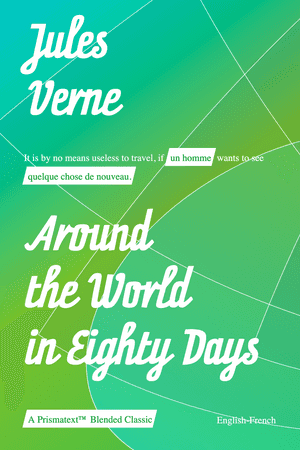
Around the World in Eighty Days
Jules Verne
From Wikipedia:
Around the World in Eighty Days (French: Le tour du monde en quatre-vingts jours) is an adventure novel by the French writer Jules Verne, first published in French in 1872. In the story, Phileas Fogg of London and his newly employed French valet Passepartout attempt to circumnavigate the world in 80 days on a wager of £20,000 (equivalent to £1.9 million in 2019) set by his friends at the Reform Club. It is one of Verne's most acclaimed works.
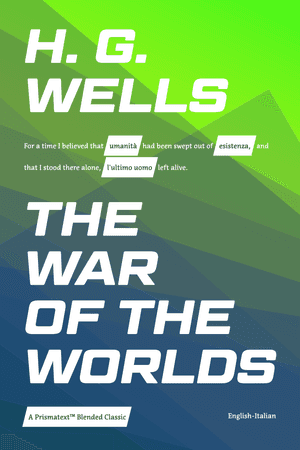
The War of the Worlds
H. G. Wells
From Wikipedia:
The War of the Worlds is a science fiction novel by English author H. G. Wells. It was written between 1895 and 1897, and serialised in Pearson's Magazine in the UK and Cosmopolitan magazine in the US in 1897. The full novel was first published in hardcover in 1898 by William Heinemann. The War of the Worlds is one of the earliest stories to detail a conflict between humankind and an extraterrestrial race. The novel is the first-person narrative of an unnamed protagonist in Surrey and his younger brother in London as southern England is invaded by Martians and is one of the most commented-on works in the science fiction canon.
The plot is similar to other works of invasion literature from the same period, and has been variously interpreted as a commentary on the theory of evolution, imperialism, and Victorian era fears, superstitions and prejudices. Wells later noted that inspiration for the plot was the catastrophic effect of European colonisation on the Aboriginal Tasmanians. Some historians have argued that Wells wrote the book to encourage his readership to question the morality of imperialism. At the time of publication, it was classified as a scientific romance, like Wells's earlier novel, The Time Machine.
The War of the Worlds has been both popular (having never been out of print) and influential, spawning numerous feature films, radio dramas, a record album, comic book adaptations, television series, and sequels or parallel stories by other authors. It was memorably dramatised in a 1938 radio programme, directed by and starring Orson Welles, that reportedly caused panic among listeners who did not know that the events were fictional. The novel even influenced the work of scientists. Robert H. Goddard was inspired by the book, and helped develop both the liquid-fuelled rocket and multistage rocket, which resulted in the Apollo 11 Moon landing 71 years later.
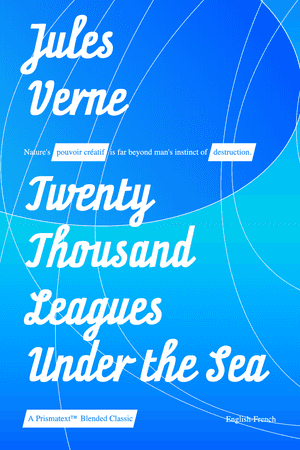
Twenty Thousand Leagues Under the Sea
Jules Verne
An icon of early sci-fi following the undersea adventures of a marine biologist and a master whaler as they explore the oceans with the brilliant and enigmatic Captain Nemo.
Emma
Jane Austen
From Wikipedia:
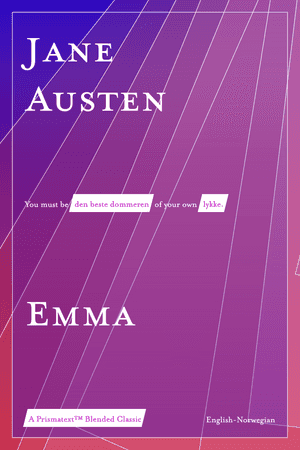
Emma is a novel written by English author Jane Austen. It is set in the fictional country village of Highbury and the surrounding estates of Hartfield, Randalls and Donwell Abbey, and involves the relationships among people from a small number of families. The novel was first published in December 1815, although the title page is dated 1816. As in her other novels, Austen explores the concerns and difficulties of genteel women living in Georgian–Regency England. Emma is a comedy of manners.
Before she began the novel, Austen wrote, "I am going to take a heroine whom no one but myself will much like." In the first sentence, she introduces the title character as "Emma Woodhouse, handsome, clever, and rich, with a comfortable home and a happy disposition... had lived nearly twenty-one years in the world with very little to distress or vex her." Emma is spoiled, headstrong, and self-satisfied; she greatly overestimates her own matchmaking abilities; she is blind to the dangers of meddling in other people's lives; and her imagination and perceptions often lead her astray.
Emma, written after Austen's move to Chawton, was her last novel to be published during her lifetime, while Persuasion, the last complete novel Austen wrote, was published posthumously.
The novel has been adapted for a number of films, television programmes and stage plays.
The Adventures of Sherlock Holmes
Arthur Conan Doyle
from Wikipedia:
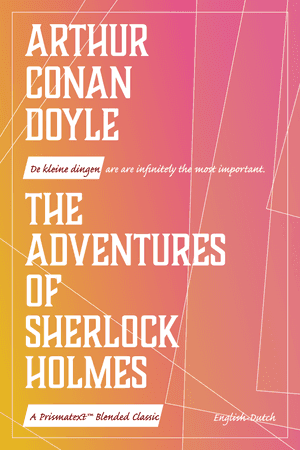
The Adventures of Sherlock Holmes is a collection of twelve short stories by British writer Arthur Conan Doyle, first published on 14 October 1892. It contains the earliest short stories featuring the consulting detective Sherlock Holmes, which had been published in twelve monthly issues of The Strand Magazine from July 1891 to June 1892. The stories are collected in the same sequence, which is not supported by any fictional chronology. The only characters common to all twelve are Holmes and Dr. Watson and all are related in first-person narrative from Watson's point of view.
In general the stories in The Adventures of Sherlock Holmes identify, and try to correct, social injustices. Holmes is portrayed as offering a new, fairer sense of justice. The stories were well received, and boosted the subscriptions figures of The Strand Magazine, prompting Doyle to be able to demand more money for his next set of stories. The first story, "A Scandal in Bohemia", includes the character of Irene Adler, who, despite being featured only within this one story by Doyle, is a prominent character in modern Sherlock Holmes adaptations, generally as a love interest for Holmes. Doyle included four of the twelve stories from this collection in his twelve favourite Sherlock Holmes stories, picking "The Adventure of the Speckled Band" as his overall favourite.
The Call of the Wild
Jack London
From Wikipedia:
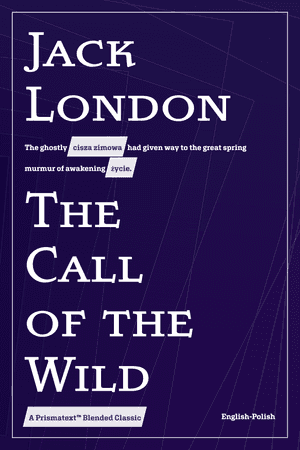
The Call of the Wild is a short adventure novel by Jack London, published in 1903 and set in Yukon, Canada, during the 1890s Klondike Gold Rush, when strong sled dogs were in high demand. The central character of the novel is a dog named Buck. The story opens at a ranch in Santa Clara Valley, California, when Buck is stolen from his home and sold into service as a sled dog in Alaska. He becomes progressively more primitive and wild in the harsh environment, where he is forced to fight to survive and dominate other dogs. By the end, he sheds the veneer of civilization, and relies on primordial instinct and learned experience to emerge as a leader in the wild.
London spent almost a year in the Yukon, and his observations form much of the material for the book. The story was serialized in The Saturday Evening Post in the summer of 1903 and was published later that year in book form. The book's great popularity and success made a reputation for London. As early as 1923, the story was adapted to film, and it has since seen several more cinematic adaptations.
One of the more notable earlier films was filmed in 1935, starring Clark Gable and Loretta Young as well as Frank Conroy and Jack Oakie. Considerable liberties were taken with the story line.
Charlton Heston starred in the 1972 version of the movie which was said to be the version most faithful to the book.
Pride and Prejudice
Jane Austen
From Wikipedia:
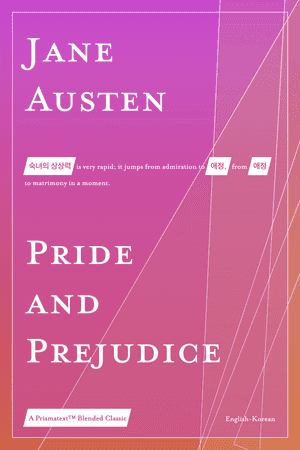
Pride and Prejudice is an 1813 novel of manners by English author Jane Austen. The novel follows the character development of Elizabeth Bennet, the protagonist of the book, who learns about the repercussions of hasty judgments and comes to appreciate the difference between superficial goodness and actual goodness.
Mr Bennet, owner of the Longbourn estate in Hertfordshire, has five daughters, but his property is entailed and can only be passed to a male heir. His wife also lacks an inheritance, so his family faces becoming poor upon his death. Thus, it is imperative that at least one of the daughters marry well to support the others, which is a motivation that drives the plot.
Pride and Prejudice has consistently appeared near the top of lists of "most-loved books" among literary scholars and the reading public. It has become one of the most popular novels in English literature, with over 20 million copies sold, and has inspired many derivatives in modern literature. For more than a century, dramatic adaptations, reprints, unofficial sequels, films, and TV versions of Pride and Prejudice have portrayed the memorable characters and themes of the novel, reaching mass audiences.